The hardest part about starting a mosaic can be staring at a blank canvas and not knowing where to begin. Sometimes there is an even bigger fear: What if I mess it up by adhering the very first piece?
If you’ve ever felt that way, you’re not alone. Here’s something I’ve learned after more than 25 years of making mosaics:
The mosaic begins long before we sit down at the project table.

The Mosaic Begins with the Hunt
For me, collecting materials is part of the mosaic-making process. The hunt for interesting materials is where much of the excitement begins and it is also one of the ways we develop our own artistic style.
Pay attention to what you naturally gravitate toward.
Do you love sparkle, bright colors, glitter, reflections, patterns, and florals?
Or are you drawn to organic textures, matte finishes, stone, earthy colors, and natural materials from nature?
There is no right or wrong answer. What matters is noticing what excites you and inspires you to create.
When you collect materials with your own preferences in mind, you begin to develop your personal mosaic vocabulary. You start to recognize the colors, textures, shapes, and materials that feel like you. Over time, these preferences become part of your artistic voice.
And when you have a collection of materials that you’re genuinely excited about using, starting the mosaic becomes much easier and more natural.

Start with Materials That Work Together
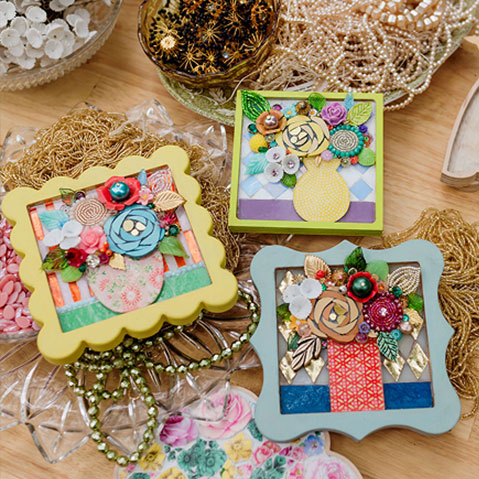
One of the reasons I love working with mixed-media mosaic is the incredible variety of materials you can bring together.
A mosaic doesn’t have to be made from one type of tesserae. In fact, I often find that combining materials with different textures, finishes, sizes and reflective qualities creates a much more interesting result.
This is also the philosophy behind my Mosaic Tesserae Treasure Bundles.
I curate each bundle with a variety of tesserae that are designed to work together as a mixed-media mosaic. The bundles include an assortment of pieces with different textures, finishes, sizes and colors, organized around a particular color palette.
You might find shiny and matte surfaces, ceramic, beads, mirror, metallic elements, pearlescent pieces, translucent materials and other unexpected treasures, all selected to give you variety while still creating a cohesive palette.
This takes some of the guesswork out of getting started.
Instead of staring at hundreds of unrelated materials and wondering what might work together, you can begin with a curated collection that already has a visual relationship.
From there, the designing can begin.
Have a Plan… but Leave Room for Spontaneity
You may want to create a loose design or have a general color palette in mind before you begin.
I prefer to have a balance between the two.
I like having enough of a plan to give me direction, while still leaving room for spontaneity. That’s often where the magic of mosaic happens.
Discovering how two unexpected materials look fantastic together or how a found object fits perfectly into the design or a particular piece of vintage china inspires you to change the direction of your pattern…
These little discoveries can be some of the most rewarding and exciting parts of making a mosaic. Leaving room for these spontaneous opportunities takes some trust in the process and with each project, our mosaic design skills grow.
Make a loose plan and leave room to experiment and push ideas.
Just Make the First Mark
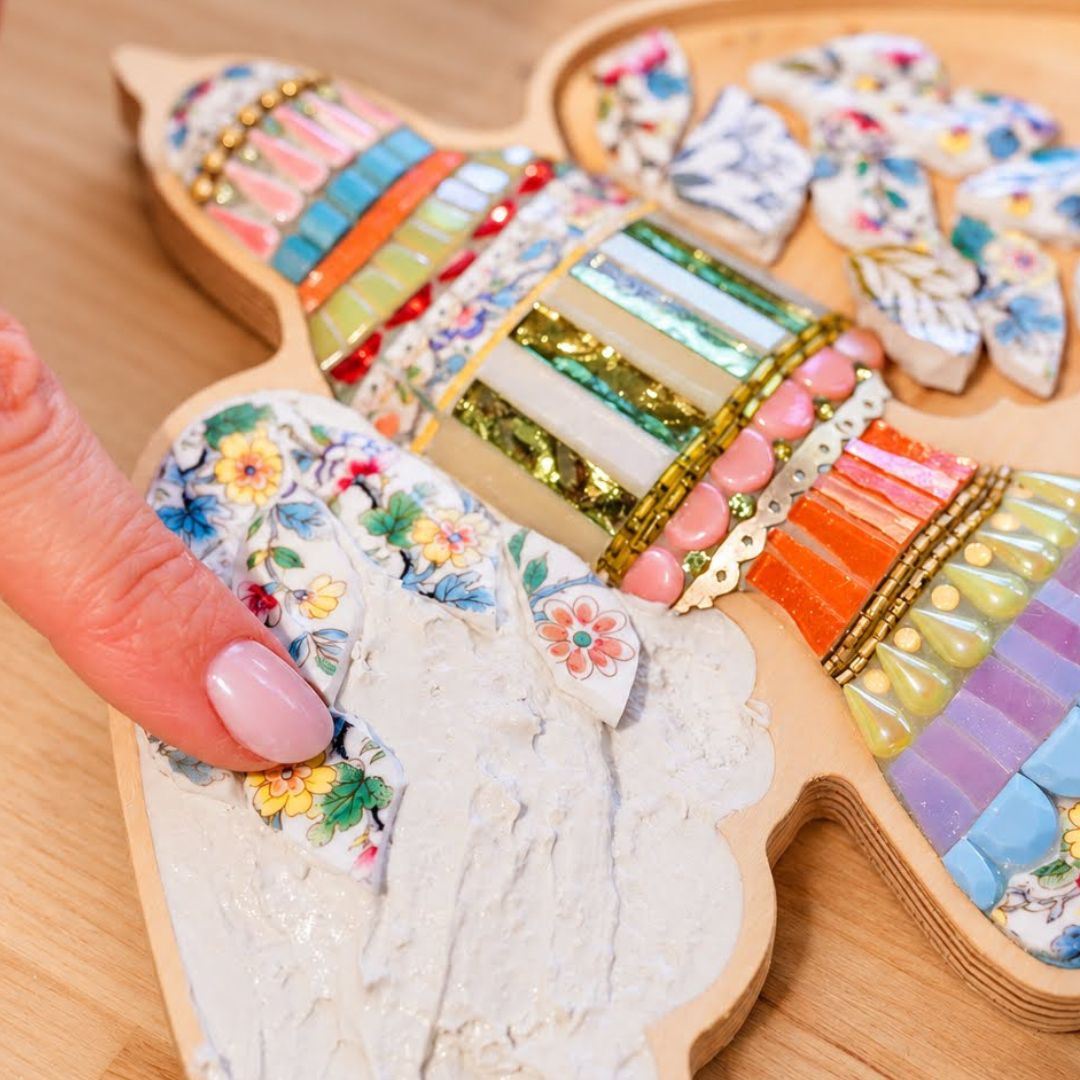
When students in my classes don’t know where to begin, I often encourage them to simply start with a basic outline around the edges.
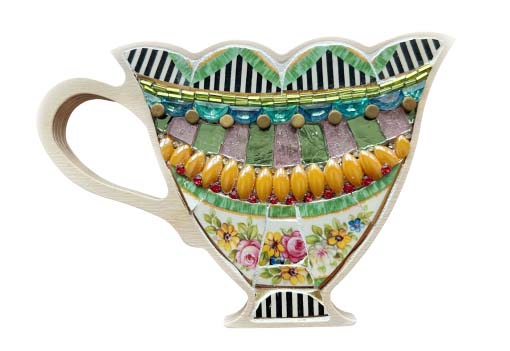
Frame your substrate with a simple row of tile, beads, or another material.
It can be a solid color, or you can take one small step toward something more adventurous by creating a simple pattern, perhaps alternating two colors.
The goal isn’t to finish the entire design, it is to simply to make the first mark.
Once you’ve made that first decision, the blank substrate doesn’t feel quite so intimidating. It becomes much easier to take the next step and build upon what you’ve already started.
Let the Design Help You Make Decisions
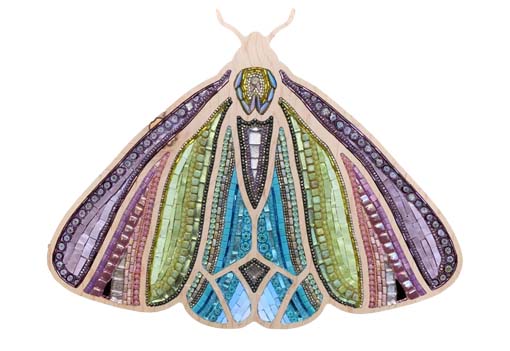
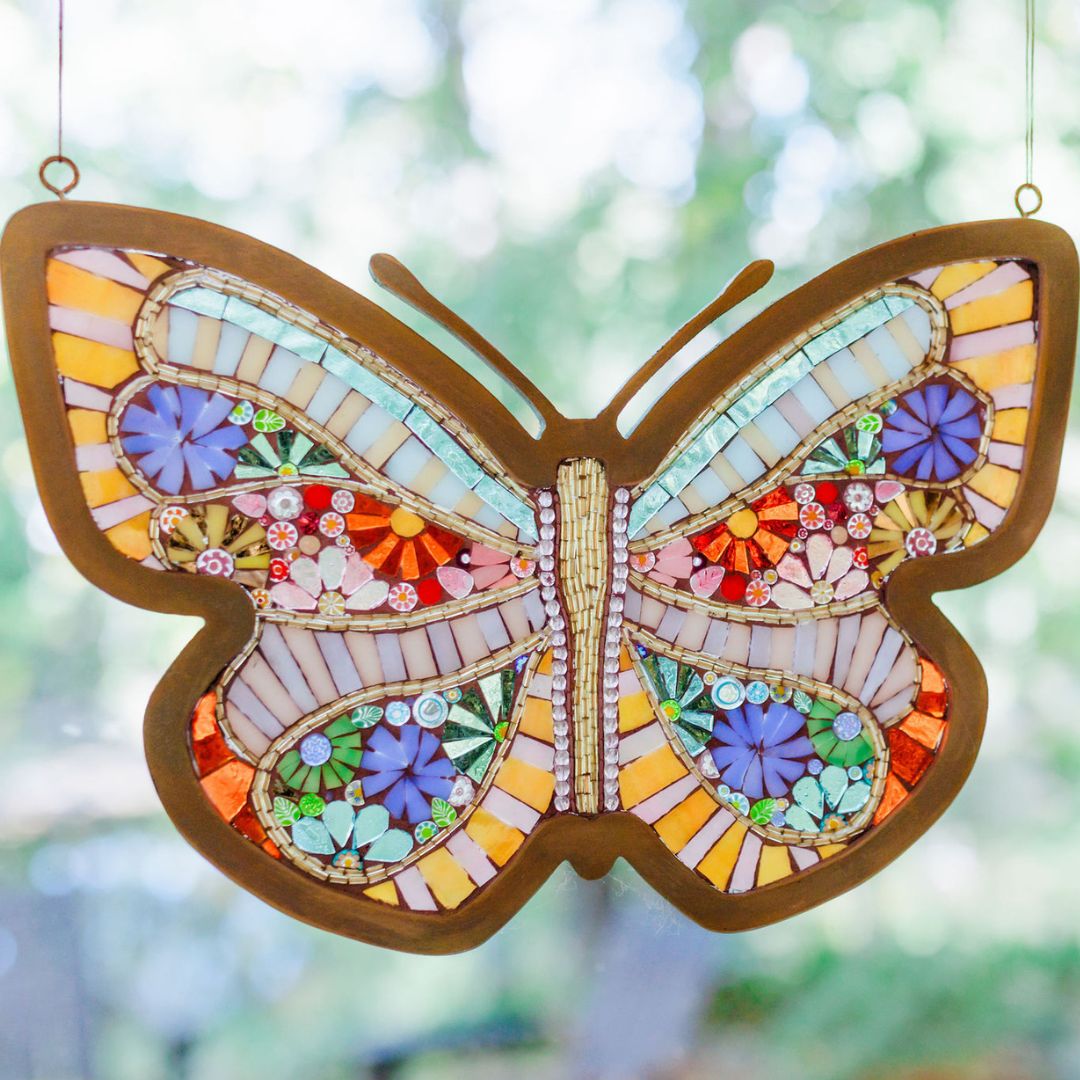
If you’re working with a symmetrical design, such as a butterfly, you only have to make each design decision once.
Work on one side, then repeat the decision on the other side.
This can take away some of the pressure of figuring out what comes next.
If you’re creating a subject with a face, such as an owl or a chicken, I often recommend starting with the eye. The eye immediately establishes a focal point and gives you something to build around.
Sometimes the easiest way to begin is to identify the part of the design that feels most important and start there.
Think of Your Materials Like a Painter Thinks of Brushstrokes
When I select materials for a mosaic, I like to follow somewhat of a recipe, especially when I’m working with a mixed-media approach.
I want my materials to complement one another while still providing enough variety to keep the mosaic interesting.
One of the most important things I consider is scale. I like to have a variety of sizes in my pieces.
Think of your larger pieces as broad brushstrokes and your smaller pieces as the little detailed brushstrokes.
If you look at a painting where every brushstroke is exactly the same size, nothing feels particularly important or interesting. Everything begins to blend together.
The same thing can happen in a mosaic.
Variety in scale creates visual interest.
Use larger pieces to establish shapes and areas of visual weight and smaller pieces to add detail and refinement.
Add Variety Through Texture and Finish
You can also create variety through your materials themselves.
Consider combining:
- Shiny and matte surfaces
- Metallic and non-metallic finishes
- Mirror and ceramic
- Pearlescent materials
- Translucent and opaque pieces
- Beads and tile
- Smooth and highly textured materials
- Different metal finishes
A mosaic becomes much more interesting when the materials interact with one another.
Light moves across shiny surfaces, matte materials absorb light, transparent pieces allow light to pass through and metallic materials reflect it differently.
These differences create depth, dimension and visual interest, even when your color palette is simple.
This is one of the reasons I enjoy creating my Tesserae Treasure Bundles. I’m not simply choosing a group of materials in the same color family. I’m thinking about how the different materials will interact with one another once they are placed together in a mosaic.

Repeat a Simple Pattern
If you’re nervous about designing a mosaic from scratch, repetition is a great place to start.
Try creating a simple repeating pattern around the perimeter of a basic shape.
You might alternate two colors or repeat a simple combination of shapes. Repeating a small, manageable sequence can be a wonderful way to dip your toe into mosaic design, build confidence with your materials and learn how pieces work together.
And once you feel comfortable with the results, you can try making the pattern more complex.
Most Importantly: Be True to You
One of the best ways to stay inspired when designing a mosaic is to be true to your own taste.
Of course, you can look at the work of other artists for inspiration. You can learn techniques from other makers. You can learn the principles of design and discover which materials tend to work well together.
All of that is valuable.
But if you’re following someone else’s rules and using materials that don’t genuinely excite you, the end result may feel a little lackluster to you, the maker.
I think it’s worth spending extra time searching for the materials that make your eyes light up.
Find the colors, textures, sparkle, patterns, vintage treasures or unexpected objects that make you want to sit down at your mosaic table and start working.
When we are genuinely excited about what we’re making, it can create an artistic flow state where you become so absorbed in the process that you lose track of time.
This is the best feeling and what I would love for you to experience in mosaic making!
Set Yourself Up for Success
If you’re feeling overwhelmed by where to begin, a mosaic kit can be a great place to start. A thoughtfully assembled kit gives you a collection of materials that have already been selected to work together, along with an example and demonstrations of different ways you can use those materials.
You can follow the example closely or use it as a starting point and experiment with your own ideas.
My Whimsy Bird Kit or Mini Pear Kit are both great ways to explore different mosaic materials and experiment with how they can be combined in a mosaic design.
Ultimately, give yourself permission to play, experiment and see where the materials lead you. You don’t need to have the entire mosaic figured out before you begin. Often, the best designs emerge unplanned, one little piece at a time.
Ready for the Next Step of Getting Started with Mosaic Art?
> Next Post: Step 3: Should You Cut Mosaic Materials Before or After Mixing Your Adhesive?
< Previous Post: Step 1: Setting Up Your Space For a Mosaic Project